


Solution for continuous core temperature monitoring
The temperature variable is a key indicator of the patient’s febrile state. The continuous nature of the measurement is quite difficult to obtain and only a few restrictive devices (rectal, esophageal probes, etc.) allow continuous core temperature monitoring.
eCelsius Medical, class IIB medical device, is a miniaturized electronic ingestible capsule that transmits core temperature data continuously. The capsule communicates in real time with a dedicated monitor, e-Viewer Medical, at a sampling period of 30 seconds. This monitor allows data recording, and an alert may be triggered if a threshold has been exceeded. The communication distance between the capsule and the monitor ranges from 1 to 3m (depending on environment and patient).
The capsule also has its own memory. In the case of a communication disruption between the monitor and the capsule, an a posteriori automatic synchronization of the data is performed.

Powering high performance aerosol drug delivery
Throughout the hospital, the Aerogen Pro-X Controller powers the Aerogen Solo in one easy to use device. Powering Aerogen technology at every stage of patient care including mechanical ventilation, HFNC, NIV, and spontaneous breathing. The Aerogen Pro-X Controller portable power source with 30-minute and continuous modes is specifically designed to provide high-performance aerosol medication treatments throughout the hospital.

Comfy®, positioning nest
Innovative positioning aids in four different sizes. They stabilize, are very soft, extremely hygienic and support the infant’s neurophysiological maturation through appropriate body orientation. While supportive positioning in prone, supine and side-lying positions promotes musculoskeletal development, it also conveys a sense of security and comfort.
The specially designed head and foot pieces can be individually adjusted, with stabilization facilitated by snap fasteners. This frees NICU nurses from the need to use makeshift solutions that consume a lot of time and effort. This product has been developed in collaboration with the University Hospital Tübingen as well. The work of the neonatal ward is oriented to the development-promoting and individualized training programmes of the NIDCAP whose pioneering guidelines have been adopted. It is tested and certified according to Oeko-Tex®Standard100
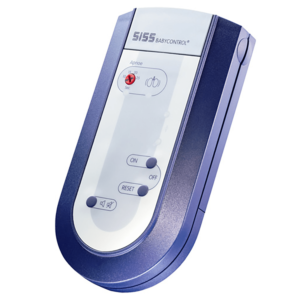
Reliable respiration monitoring
The SISS BABYCONTROL monitors respiration of babies and infants and can thus provide reliable assistance against «Sudden Infant Death». High reliability, simple operation and convenient size make the SISS BABYCONTROL® a universally applicable instrument for baby monitoring in hospitals or at home.
Being prepared
Still today, “Sudden Infant Death” is an unforeseeable occurrence. 80% of the affected infants are entirely healthy beforehand. Only 20% are from so-called risk groups (former premature births or babies already suffering from life-threatening conditions or with a «Sudden Infant Death» among close relatives). Only a prompt alarm in the event of irregularities provides the chance to apply life-saving measures within the shortest possible time. Such measures should be learned beforehand in special courses.
 Product Specification